
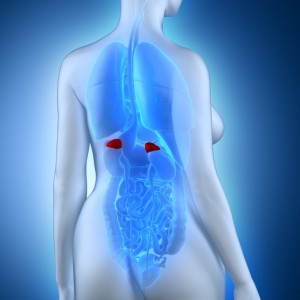
Adrenal Fatigue or HPA Axis Dysfunction
What is Adrenal Fatigue?
Are you a type-A personality? A high achiever? SuperMom? Do people wonder how you can do so much in a day? Or how do you do so many things so well? Are you under lots of stress? You may be at risk of (or are already experiencing signs of) adrenal fatigue.
“Adrenal Fatigue” vs. HPA Axis Dysfunction
The term “adrenal fatigue” was coined in 1998 by naturopath James Wilson and has since become widely used by patients and practitioners alike. It is not recognized as a diagnosis in conventional medicine, not because the underlying experience isn’t real, but because the original model was an oversimplification that didn’t accurately reflect the physiology.
The conventional critique goes like this: the adrenal glands don’t simply “fatigue” the way a muscle does, and studies measuring cortisol output in patients with so-called adrenal fatigue haven’t consistently shown low cortisol or adrenal gland insufficiency. On that narrow point, the critics are correct.
What those critics miss, and what the peer-reviewed literature has documented extensively, is that the regulatory system governing the adrenal glands absolutely can become dysregulated under chronic stress. That system is the HPA axis: the Hypothalamic-Pituitary-Adrenal axis, the feedback loop between your brain and your adrenal glands that controls cortisol output, stress response, inflammation, immune function, and energy metabolism.
The research by Fries et al. (2005) introduced the concept of HPA axis hyporeactivity as a distinct physiological state: a downregulation of the stress response system following prolonged activation, resulting in blunted cortisol output, reduced resilience, and fatigue. Hellhammer and colleagues have similarly documented how chronic psychosocial stress progressively alters HPA axis sensitivity, shifting the system from a state of hyperactivity toward a flattened, blunted response pattern. This is not adrenal gland failure. It is a centrally mediated adaptation, the brain’s regulatory centres changing how they communicate with the adrenals, and the adrenals responding accordingly creating symptoms of adrenal fatigue.
The distinction matters clinically. It means that treatment aimed only at the adrenal glands, loading up on adaptogens and vitamin C, addresses only part of the picture. True HPA axis dysfunction requires attention to central regulatory signals, feedback mechanisms, sleep architecture, circadian rhythm, inflammatory load, and the nutritional co-factors that support the entire axis, not just the end organ.
When I use the term “adrenal fatigue” on this page, I do so because it’s the language patients recognize and search for. The condition I’m actually assessing and treating is HPA axis dysfunction, a well-documented, physiologically valid entity supported by a substantial body of peer-reviewed research.
What are the adrenal glands?
You have never heard of the adrenal glands, you say? Well, you’re not alone. 90% of the patients I see with adrenal fatigue or HPA axis dysfunction have never heard of them. Why is that? Because your adrenal glands are one of your body’s most overworked yet overlooked glands. They are equally important as the other endocrine glands, like your thyroid, but they are largely ignored.
Your adrenal glands sit on top of your kidneys. They perform a variety of functions, mainly those that relate to stress. The adrenal glands secrete a variety of hormones that regulate:
- Your blood pressure
- Cardiovascular functions such as your heart rate
- Immune response and inflammation
- Sex hormones
- Your blood sugar
- The part of your nervous system that prepares you to fight or run when you are in danger. Your “fight or flight” response.
- The part of your nervous system that helps you relax, rest and digest your food
What are the symptoms of adrenal fatigue or HPA axis dysfunction?
The symptoms of adrenal fatigue include:
- Tiredness, despite getting enough sleep
- Insomnia or sleep difficulties, particularly waking throughout the night and having difficulty going back to sleep.
- Hypoglycemia (drops in your blood sugar) if you don’t eat regularly
- Feeling weak, shaky, irritable or lightheaded if you don’t eat regularly
- Hormonal imbalance or infertility
- Anxiety or inability to cope with stress
- Poor digestion or irritable bowel syndrome
- Allergies, asthma, eczema
- Inflammatory or autoimmune conditions
- Mood disorders, including depression and bipolar disorder
Testing HPA Axis Function: What Each Method Can and Can’t Tell You About Adrenal Fatigue
Testing the HPA axis for adrenal fatigue is more nuanced than ordering a single cortisol level. Here is an honest assessment of each method, including what I use in clinical practice and why.
Morning Serum Cortisol (OHIP-Covered)
A morning blood cortisol, drawn between 7 and 9 a.m., is the standard test ordered through most Ontario physicians and covered by OHIP when ordered by an MD (not if I, as an ND, order it).
What it tells you:
Morning serum cortisol reflects the peak of the daily cortisol curve and, at the extremes, can identify frank adrenal insufficiency (Addison’s disease, typically values below 140 nmol/L) or hypercortisolism (Cushing’s syndrome, typically values above 700 nmol/L). It provides a useful baseline and, if significantly low or high, is clinically diagnostic.
What it misses:
A single morning value tells you nothing about the cortisol rhythm across the entire day. Two patients can have identical morning cortisol values, one with a healthy diurnal decline and one with a completely flat curve and appear identical on this one test. It also captures only total cortisol (bound plus free), whereas only the free fraction is biologically active.
My approach:
Because morning serum cortisol is accessible, OHIP-covered, and provides at least a threshold indicator of HPA axis function, I often encourage patients to request this through their MD as a starting point. If cortisol is in the lower quartile of the reference range, or if the clinical picture strongly suggests HPA axis dysfunction despite a “normal” result, more detailed dynamic testing is warranted.
4-Point Salivary Cortisol Testing
Salivary cortisol is collected at four time points across the day: on waking, at noon, in the afternoon (around 4 p.m.), and at night (around 8 p.m.). This is a private test, not covered by OHIP.
What it tells you:
Salivary cortisol measures the free, biologically active fraction of cortisol, the portion that actually enters tissues and exerts physiological effects. The four-point collection maps the entire diurnal cortisol curve, revealing not just total output but the pattern of cortisol secretion across the day.
What it tells you that serum can’t:
It captures the cortisol awakening response (the sharp rise in the first 30–45 minutes after waking), the morning peak, the afternoon decline, and the evening nadir. Each of these points corresponds to specific clinical presentations. A blunted awakening response explains why a person cannot function before noon, regardless of how much they slept. Elevated evening cortisol explains the patient who is exhausted all day but wired at 11 p.m. and cannot fall asleep. These patterns are invisible on a single morning draw.
Limitation:
Collection is user-dependent. Patients must follow specific protocols (no food or toothbrushing within 30 minutes of collection, no high-intensity exercise, proper sample timing). Deviation from protocol introduces error.
24-Hour Urinary Cortisol
A 24-hour urine cortisol collection measures total cortisol output across a full day.
What it tells you:
Total integrated cortisol production. This is useful for identifying sustained hypercortisolism and is one of the standard tests used to investigate Cushing’s syndrome. It is more sensitive than a single serum value for detecting overall excess.
What it misses:
Like serum cortisol, it provides no information about rhythm or pattern. A patient with high morning and low evening cortisol and a patient with low morning and high evening cortisol can produce identical 24-hour totals while having completely different clinical pictures. It also doesn’t capture the cortisol awakening response.
My approach in practice:
The 4-point salivary test is the most clinically informative option for assessing HPA axis function in the context of fatigue, burnout, and stress-related illness. The 24-hour urinary free cortisol is more appropriate when frank hypercortisolism or Cushing’s syndrome is suspected. The morning serum cortisol is the practical starting point when working within the publicly funded system.
All cortisol testing is interpreted alongside DHEA-S, the adrenal androgen that acts as cortisol’s physiological counterbalance. The cortisol-to-DHEA-S ratio is often more informative than either value in isolation.
Reading DHEA-S in Context
DHEA-S is produced almost exclusively by the adrenal cortex and is the most abundant circulating steroid in the body. It declines with age and declines more steeply under chronic stress, as the adrenal cortex prioritizes cortisol production over DHEA-S synthesis.
A low DHEA-S in the context of normal or low cortisol suggests advanced HPA axis adaptation. A low DHEA-S in the context of still-elevated cortisol suggests the system is in an earlier stage of dysregulation. This pattern informs both the clinical stage and the appropriate treatment approach.
Aldosterone
Aldosterone is a hormone that helps to manage salt and water balance. It regulates your blood pressure. A blood test measures your aldosterone level.
ACTH
Your pituitary gland releases Adrenocorticotrophic hormone (ACTH). It is a hormone that stimulates your adrenal glands. A blood test measures your ACTH level.
The Stages of HPA Axis Dysfunction
HPA axis dysfunction is not a single state; it is a progression. Understanding which stage you are in is essential for targeted treatment. Most patients I see are in stage 2 or 3 by the time they seek help, having pushed through stage 1 symptoms for years.
Stage 1: Hypercortisolism (Chronic Stress Activation)
This is the initial response to sustained stress. The HPA axis is fully engaged, cortisol output is elevated, and the system is running at a chronic high alert.
What this looks like clinically:
- Difficulty falling asleep despite physical exhaustion
- Wired but tired, high energy output with underlying fatigue
- Increased abdominal fat deposition (cortisol drives visceral adiposity)
- Elevated blood pressure and fasting blood sugar
- Anxiety, irritability, and low frustration tolerance
- Frequent illness due to cortisol-mediated immune suppression
- Menstrual irregularities from cortisol-driven suppression of reproductive hormones
At this stage, cortisol output on testing is elevated, particularly in the afternoon and evening when it should be declining. The diurnal curve is flattened or inverted.
The internal cost of high cortisol:
Sustained high cortisol accelerates bone loss, impairs memory consolidation (cortisol is directly neurotoxic to the hippocampus at chronically elevated levels), promotes insulin resistance, and steadily depletes the nutritional co-factors the adrenal glands require to function, particularly vitamin C, B5, B6, magnesium, and zinc.
Stage 2: Cortisol Resistance
With prolonged exposure to elevated cortisol, tissues begin to down-regulate cortisol receptor sensitivity, analogous to the insulin resistance that occurs with chronic hyperinsulinemia. The HPA axis compensates by producing more cortisol to achieve the same physiological effect, but receptor-level responsiveness is diminishing.
What this looks like clinically:
- Fatigue that doesn’t resolve with rest
- Brain fog and difficulty concentrating
- Increasing reliance on caffeine, sugar, or stimulants to function
- Worsening sleep despite feeling exhausted
- Heightened inflammatory symptoms, allergies, eczema, joint pain flaring
- Mood instability and increasing difficulty with emotional regulation
- Cortisol levels on testing may still appear normal or slightly elevated, masking the underlying receptor-level dysfunction
This is the stage most frequently missed by standard testing. Cortisol values fall within the normal range, and patients are told everything looks fine, while their quality of life continues to deteriorate.
Stage 3: Hypocortisolism (HPA Hypo-response)
After sustained activation and progressive receptor down-regulation, the HPA axis shifts into a state of blunted output. Cortisol production is reduced, the cortisol awakening response is flattened, and the system has adapted to a new, lower set-point.
This is what the peer-reviewed literature describes as HPA hyporeactivity, the pattern documented by Fries et al. and consistent with findings in burnout, chronic fatigue syndrome, post-traumatic stress, and fibromyalgia research.
What this looks like clinically:
- Profound difficulty waking in the morning regardless of sleep duration
- Craving salt (aldosterone, which works alongside cortisol to regulate sodium, is also reduced)
- Feeling best later in the day; some patients don’t feel functional until mid-afternoon
- Dizziness on standing (orthostatic hypotension from reduced aldosterone)
- Hypoglycemia between meals; cortisol normally stabilizes blood sugar between eating
- Low blood pressure
- Emotional flatness, apathy, or numbness alongside fatigue
- Very low tolerance for additional stress, even minor stressors feel overwhelming
On testing: blunted or flat 4-point cortisol curve, low or absent cortisol awakening response, low DHEA-S, sometimes low aldosterone.
How HPA Axis Dysfunction Drives Other Conditions
HPA axis dysfunction rarely exists in isolation. Dysregulated cortisol exerts downstream effects on virtually every other hormonal system in the body. Understanding these connections explains why so many of my patients present with multiple apparently unrelated conditions that resolve together once the HPA axis is addressed.
Thyroid Suppression
Chronic elevated cortisol suppresses the conversion of T4 to the more active T3, the form of thyroid hormone your cells actually use. It also reduces thyroid-stimulating hormone (TSH) output from the pituitary and impairs thyroid hormone receptor sensitivity at the cellular level. The result is functional hypothyroidism, meaning symptoms of low thyroid function even when blood tests fall within the standard reference range, also sometimes referred to as subclinical hypothyroidism.
This is why many patients with HPA axis dysfunction also report cold intolerance, weight gain, hair thinning, constipation, and fatigue that doesn’t respond to thyroid medication alone. Addressing HPA axis dysfunction is frequently a prerequisite for effective thyroid treatment.
Estrogen Dominance
The connection between HPA axis dysfunction (adrenal fatigue) and estrogen dominance runs through hypothalamic-pituitary signalling, not directly through adrenal hormone synthesis. Chronic activation of the HPA axis elevates corticotropin-releasing hormone (CRH), which suppresses pulsatile release of gonadotropin-releasing hormone (GnRH) from the hypothalamus. Reduced GnRH pulsatility means the pituitary releases less luteinizing hormone (LH) and follicle-stimulating hormone (FSH), the signals that drive egg follicle development, ovulation, and therefore estradiol and progesterone production.
The practical consequence is anovulatory or poor-quality ovulatory cycles, with reduced corpus luteum function. Since the corpus luteum is the primary source of progesterone in a normal cycle, impaired ovulation translates directly into lower progesterone output, even when estrogen levels haven’t changed. The result is a shift in the estrogen-to-progesterone ratio toward estrogen dominance, driven by chronic stress suppressing the reproductive axis at the level of the brain rather than by adrenal hormone competition. Avoid anyone making false claims about “pregnenolone steal.”
This is the same upstream mechanism responsible for stress-related cycle irregularity, anovulation, and luteal phase insufficiency (luteal phase defect). The downstream consequences include worsening PMS, irregular or heavier cycles, and progression of estrogen-sensitive conditions such as endometriosis and fibroids. You can read more about how I assess and treat estrogen dominance here.
Immune Dysregulation
Cortisol is your body’s primary endogenous anti-inflammatory signal. In Stage 1, elevated cortisol temporarily suppresses immune activity, which is why people under sustained stress often notice they hold illness at bay while stressed, then collapse when the stress lifts. In Stages 2 and 3, as cortisol receptor sensitivity declines and output drops, the anti-inflammatory brake is released. The result is immune dysregulation: worsening allergies, asthma, eczema, and inflammatory or autoimmune conditions that had previously been controlled. This is why patients with HPA axis dysfunction so frequently report that their immune and inflammatory conditions worsen in parallel with their fatigue.
Natural treatment for adrenal gland problems
Not surprisingly, every culture has its herbs for the adrenal glands. These are known as adaptogens. They are herbs that help your body adapt to and deal with stress more efficiently. Well-known adaptogens include ginseng, Rhodiola, Ashwagandha, Schisandra, and skullcap. In addition to supporting your adrenals with adaptogens, I always recommend replenishing the essential nutrients for normal adrenal gland function. Your adrenals need vitamin C, vitamin B5, vitamin B6, zinc, and magnesium.
What are the benefits of natural treatment for your adrenal fatigue (HPA axis dysfunction)?
How can supporting your adrenal glands help you? Because these small but mighty glands are involved in so many body functions, enabling them can help you with:
- Better energy
- Better ability to cope with stress
- Less anxiety and depression
- Better blood pressure
- More stable blood sugar
- Reduced inflammation
- Better hormone balance
- Improved digestion
- Better mood
Realistic Adrenal Fatigue Recovery Timeline
HPA axis dysfunction does not develop overnight, nor does it resolve overnight. Patients who expect to feel significantly better within two to four weeks will be disappointed, and those unrealistic expectations often lead to abandoning treatment before meaningful recovery occurs.
Here is what clinical experience and the available evidence suggest:
Adrenal Fatigue Treatment Months 1-2:
Stabilization. Sleep quality typically improves first. The extreme reactivity to stress begins to soften. Most patients notice they are slightly less overwhelmed by things that would previously have sent them over the edge. Energy remains low, but the floor may lift slightly. This phase focuses on rebuilding nutritional reserves and reducing the overall stress load on the system.
Adrenal Fatigue Treatment Months 3-4:
Gradual restoration of rhythm. Morning energy begins to improve. The cortisol awakening response, if retested, often shows early signs of normalization. Blood sugar stability between meals improves. Patients frequently report feeling more like themselves, not recovered, but moving in the right direction.
Adrenal Fatigue Treatment Months 4-6:
Functional recovery. Most patients with mild-to-moderate HPA dysfunction experience meaningful restoration of energy, sleep quality, stress tolerance, and mood within this window. Inflammatory conditions associated with the dysfunction often improve in parallel.
Adrenal Fatigue Treatment Beyond 6 months:
Patients with severe or long-standing HPA axis dysfunction, particularly those who have been operating in Stage 3 for years, may require 12 to 18 months of sustained treatment before feeling fully recovered. This is not failure; it is the reality of a system that has been under chronic strain for an extended period.
The most important variable is reducing the stressor load
No supplement protocol, however well-targeted, will restore HPA axis function in a patient who continues to sleep five hours a night, work 60-hour weeks, and skip meals. The foundational interventions: sleep, blood sugar stability, stress reduction, and removal of inflammatory dietary triggers are not optional adjuncts to treatment. They are the treatment, supported by targeted nutritional and botanical therapy.
Book an appointment here or call the office for more information at 416-481-0222.
Authored by Dr. Pamela Frank, BSc, ND

Dr. Pamela Frank has been in practice as a naturopathic doctor for over 26 years. Since 1999, she has earned acclaim as a leading naturopath in Toronto, amassing multiple awards.
Dr. Pamela has a special interest in addressing hormone-related complexities, including but not limited to PCOS, endometriosis, acne, hair loss, weight management, thyroid issues, and fertility.
Residing in Toronto with her family and loyal companion, Dolly the rescue dog, Dr. Pamela seamlessly combines her professional commitment with a diverse range of interests.
Beyond her clinical endeavours, she actively engages in kickboxing, leadership roles within Scout Groups, yoga practice, podcasting, and outdoor pursuits such as backcountry camping.
Dr. Pamela’s comprehensive approach reflects not only her dedication to optimal health but also her passion for continual personal and professional growth.
Adrenal Gland and HPA Axis Research
HPA Axis and Bipolar Disorder
Bipolar disorder is associated with dysfunction of HPA axis activity. Targeting HPA axis dysfunctions might be a novel strategy to improve the outcomes of bipolar disorder.
Psychoneuroendocrinology. 2016 Jan;63:327-42. doi: 10.1016/j.psyneuen.2015.10.014. Epub 2015 Oct 21.
The HPA axis in bipolar disorder: Systematic review and meta-analysis.
Belvederi Murri M1, Prestia D2, Mondelli V3, Pariante C3, Patti S2, Olivieri B2, Arzani C2, Masotti M2, Respino M2, Antonioli M4, Vassallo L2, Serafini G2, Perna G5, Pompili M6, Amore M2.
Depression and HPA axis dysfunction
Studies demonstrate HPA axis overactivity in major depression, a relationship of HPA axis activity to cognitive performance, and a potential role of HPA axis genetic variation in cognition.
Mol Psychiatry. 2017 Apr;22(4):527-536. doi: 10.1038/mp.2016.120. Epub 2016 Aug 16.
HPA axis in major depression: cortisol, clinical symptomatology, and genetic variation predict cognition.
Keller J1, Gomez R1,2, Williams G3, Lembke A1, Lazzeroni L1, Murphy GM Jr1, Schatzberg AF1.
Cortisol, Depression, Anorexia and Sleep Apnea
Depression, anorexia nervosa, and obstructive sleep apnoea are associated with increased cortisol exposure. Higher nighttime cortisol exposure is observed in patients with Cushing’s syndrome. High night cortisol is associated with insulin resistance and increased cardiovascular risk and mortality. A decrease in cortisol rhythm amplitude is seen in adrenal insufficiency, and despite replacement, patients have an impaired quality of life and increased mortality.
Best Pract Res Clin Endocrinol Metab. 2017 Oct;31(5):459-473. doi: 10.1016/j.beem.2017.10.011. Epub 2017 Nov 2.
Human studies on hypothalamic-pituitary-adrenal (HPA) axis.
Liyanarachchi K1, Ross R2, Debono M3.
HPA axis hyporeactivity as a distinct physiological state following chronic stress:
Eva Fries, Judith Hesse, Juliane Hellhammer, Dirk H. Hellhammer, A new view on hypocortisolism, Psychoneuroendocrinology, Volume 30, Issue 10, 2005, Pages 1010-1016, ISSN 0306-4530, https://doi.org/10.1016/j.psyneuen.2005.04.006.
Chronic psychosocial stress and progressive HPA axis sensitization and blunting:
Hellhammer DH, Wüst S, Kudielka BM. Salivary cortisol as a biomarker in stress research. Psychoneuroendocrinology. 2009 Feb;34(2):163-171. doi: 10.1016/j.psyneuen.2008.10.026. Epub 2008 Dec 18. PMID: 19095358.
Salivary cortisol and 4-point testing as superior to single morning serum cortisol for assessing diurnal HPA axis function:
Kudielka BM, Broderick JE, Kirschbaum C. Compliance with saliva sampling protocols: electronic monitoring reveals invalid cortisol daytime profiles in noncompliant subjects. Psychosom Med. 2003 Mar-Apr;65(2):313-9. doi: 10.1097/01.psy.0000058374.50240.bf. PMID: 12652000.
Cortisol-driven suppression of T4-to-T3 conversion and functional hypothyroidism under chronic stress:
Ortiga-Carvalho TM, Chiamolera MI, Pazos-Moura CC, Wondisford FE. Hypothalamus-Pituitary-Thyroid Axis. Compr Physiol. 2016 Jun 13;6(3):1387-428. doi: 10.1002/cphy.c150027. PMID: 27347897.
HPA axis suppression of the HPG axis via CRH-mediated inhibition of GnRH pulsatility:
Whirledge S, Cidlowski JA. Glucocorticoids, stress, and fertility. Minerva Endocrinol. 2010 Jun;35(2):109-25. PMID: 20595939; PMCID: PMC3547681.