
What is Estrogen Dominance?
You may read elsewhere that estrogen dominance means you have too much estrogen. That’s only partially true. Sometimes, it is that you have high estrogen. But more often, it is having relatively more estrogen than one or more of the other hormones that should balance it. These include progesterone, DHEAs, and testosterone. Also, environmental pollutants can act like estrogen. These are called xenoestrogens. They bind to estrogen receptors and cause excess estrogen-like activity.
What are the symptoms of Estrogen Dominance?
While you need a certain level of estrogen, too much of a good thing can cause symptoms like:
- PMS – sad, emotional, weepy crying type PMS
- Breast tenderness
- Headaches or Migraines
- Uterine fibroids
- Uterine polyps
- Acne
- Heavy periods
- Painful periods
- Hormone-related conditions of the ovaries, uterus or breast
- Endometriosis
- Anxiety or depression
- Weight gain
Is there an Estrogen Dominance test?
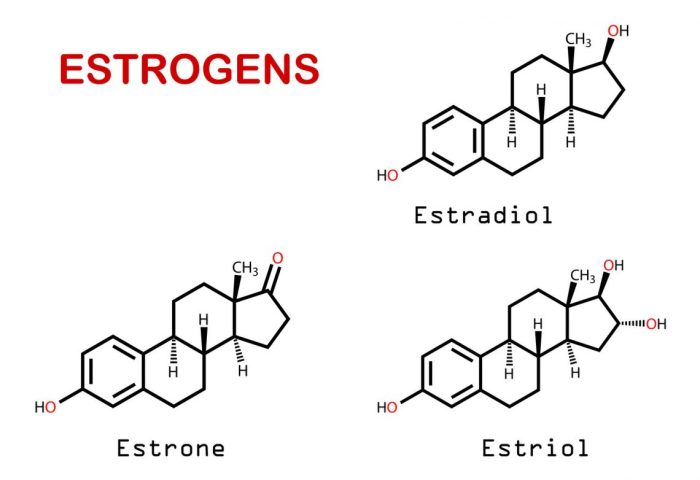
Well, now that depends. There is a blood test for one form of estrogen (estradiol). But did you know that estradiol is only one of 3 primary forms of estrogen in your body? The other two are estrone and estriol. These are not usually measured on blood tests. So, your estradiol blood test may return perfectly normal, but there may still be estrogen dominance.
Even if your estradiol blood test is normal, it depends on how the other reproductive hormones are faring and how active your estrogen is. This is regulated by a protein called sex hormone-binding globulin (SHBG).
Which Hormones Should I Test?
If you want to have your hormone levels tested, a full hormone blood test panel would include:
- total testosterone
- DHEAs
- androstenedione
- progesterone level (best measured on day 21, IF your cycles are regularly 28 days)
- SHBG
- estradiol (on days 3 and 14 of a cycle)
- LH and FSH (day 3)
- prolactin
- dihydrotestosterone
To interpret them accurately, certain hormones must be tested at specific points in your menstrual cycle. There may only be subtle shifts in these hormones that your doctor considers normal. But those subtle shifts are sometimes enough to cause the above symptoms. Even if all the blood tests are normal, we still have the unknowns of estrone and estriol and several other forms of estrogen.
With the above symptoms, I often help the liver with estrogen metabolism, regardless of blood test results. However, I always like to see the exact numbers as well.
What About a Saliva Test for Estrogen?
You can take a 30-day series of saliva samples to track estrogen throughout your cycle. This helps determine whether estrogen rises or falls as it should throughout the cycle. However, it is an expensive test and is not covered by OHIP. I find serum tests for estrogen sufficient and are covered by OHIP.
What about a DUTCH test or urine test for hormones?
DUTCH tests provide extensive information about all of your hormones. It also tells you how well you are breaking down these hormones. This test is also expensive and not covered by OHIP. It may be covered by your employee health benefits, though.
How do you treat Estrogen Dominance?
To efficiently process extra estrogen for disposal, your liver requires specific nutrients in specific forms. It does not require dandelion or milk thistle, which are the constituents of many liver detox kits. It does require 5-methyltetrahydrofolate, pyridoxal-5-phosphate, indole-3-carbinol, methylcobalamin, N-acetylcysteine, glutathione, and calcium-d-glucarate. These are all-natural substances, but almost none are found in health food store liver detox kits. I would use these treatments to enhance overall liver detoxification. They also ensure complete and efficient estrogen metabolism.
Helping the liver has dramatically improved the above-mentioned symptoms. This improves the metabolism of excess estrogen and xenoestrogens (chemical pollutants like BPA that can act like estrogen and can be even more potent).
Frequently Asked Questions About Estrogen Dominance
Does estrogen dominance mean my estrogen is too high?
Not necessarily. Estrogen dominance more often reflects an imbalance, having relatively more estrogen than the hormones that should counterbalance it, particularly progesterone, but also DHEAs and testosterone. Your estradiol can be entirely normal on a blood test and you can still be experiencing estrogen dominance, because the issue is the ratio, not just the absolute number.
Can I have estrogen dominance with a normal estradiol blood test?
Yes. This is one of the most common reasons estrogen dominance goes undiagnosed. Estradiol is only one of three primary forms of estrogen in your body, estrone and estriol typically aren’t measured on standard blood work. Your estradiol can return “normal” while overall estrogen activity remains excessive, particularly when SHBG (sex hormone-binding globulin) levels affect how much estrogen is biologically active versus bound and inactive.
What are the most common symptoms of estrogen dominance?
The symptom picture is broad because estrogen affects multiple tissues. Common presentations include PMS with a tearful or emotional quality, breast tenderness, headaches or migraines (especially cycle-related), heavy or painful periods, acne, weight gain, and anxiety or low mood that fluctuates with your cycle. Estrogen dominance is also implicated in fibroids, uterine polyps, and endometriosis.
Can estrogen dominance cause anxiety or depression?
It can contribute to both. Estrogen influences neurotransmitter activity, and when estrogen is high relative to progesterone (which has a calming, GABA-supportive effect), the result can be increased anxiety, irritability, or low mood that tracks with specific phases of your cycle rather than being constant.
What blood tests check for estrogen dominance?
A complete hormone panel includes total testosterone, DHEAs, androstenedione, progesterone (ideally drawn on day 21 if your cycle is a regular 28 days), SHBG, estradiol (drawn on days 3 and 14 of a 28-day cycle), LH and FSH (day 3), prolactin, and dihydrotestosterone. Timing matters significantly; testing the wrong hormone on the wrong day of the cycle can yield a misleading result, even when something is genuinely off.
Why does progesterone need to be tested on day 21?
Progesterone is produced primarily after ovulation, by the corpus luteum. Day 21 (in a regular 28-day cycle) typically falls in the luteal phase when progesterone should be at its peak. Testing it at the wrong time can make adequate progesterone production look deficient, or miss a genuine deficiency entirely.
Is there a test that’s more accurate than a standard blood test for estrogen dominance?
Saliva testing and DUTCH (urine) testing both provide a more complete picture, including how your body metabolizes estrogen, not just how much estrogen is present. Both are more expensive than standard blood work and not covered by OHIP, though DUTCH testing may be partially covered by some employee health benefit plans. Standard serum testing, properly timed, is often sufficient to guide treatment and has the advantage of OHIP coverage.
What causes estrogen dominance?
Several factors can contribute: inadequate progesterone production (often from anovulatory or irregular cycles), impaired liver detoxification of estrogen, and exposure to xenoestrogens, environmental chemicals such as BPA found in plastics and other pollutants that mimic estrogen by binding to estrogen receptors and creating estrogen-like activity in the body.
Do I need a liver detox kit for estrogen dominance?
No. Most over-the-counter liver detox kits are built around dandelion and milk thistle, which are not the nutrients your liver actually requires to metabolize and clear excess estrogen efficiently. Effective estrogen metabolism depends on specific compounds, including 5-methyltetrahydrofolate, pyridoxal-5-phosphate, indole-3-carbinol, methylcobalamin, N-acetylcysteine, glutathione, and calcium-d-glucarate, most or all of which aren’t found in standard detox products.
How is estrogen dominance treated naturopathically?
Treatment centres on supporting the liver’s capacity to metabolize and clear excess estrogen using the specific nutrients listed above, alongside identifying and addressing the underlying cause – whether that’s inadequate progesterone, impaired detoxification pathways, or ongoing xenoestrogen exposure. This is different from simply trying to lower estrogen; the goal is restoring balance and efficient processing.
Can estrogen dominance be diagnosed even if all my blood work comes back normal?
Yes, and this happens often. Given the limitations of standard testing, particularly that estrone and estriol usually aren’t measured, and that subtle hormonal shifts can fall within a “normal” range while still producing real symptoms, a clinical diagnosis based on your symptom pattern is often appropriate even when bloodwork looks unremarkable. In these cases, supporting liver-based estrogen metabolism is reasonable regardless of test results, though testing is still valuable for tracking progress and ruling out other causes.
For help with this or any other health problem, book an appointment here or call the office for more information at 416-481-0222.
Authored by Dr. Pamela Frank, BSc(Hons), ND, updated April 3, 2025

Dr. Pamela Frank has been in practice as a naturopathic doctor for over 26 years. Since 1999, she has earned acclaim as a leading naturopath in Toronto, amassing multiple awards.
Dr. Pamela has a special interest in addressing hormone-related complexities, including but not limited to PCOS, endometriosis, acne, hair loss, weight management, thyroid issues, and fertility.
Residing in Toronto with her family and loyal companion, Dolly the rescue dog, Dr. Pamela seamlessly combines her professional commitment with a diverse range of interests.
Beyond her clinical endeavours, she actively engages in kickboxing, leadership roles within Scout Groups, yoga practice, podcasting, and outdoor pursuits such as backcountry camping.
Dr. Pamela’s comprehensive approach reflects not only her dedication to optimal health but also her passion for continual personal and professional growth.